Role of Government in Microeconomics
Price controls, indirect taxes, subsidies, and their effects on markets and stakeholders.
- Explain why governments intervene in markets
- Analyse the effects of price ceilings and price floors on consumers, producers, and efficiency
- Explain indirect taxes and analyse their effects on price, quantity, CS, PS, government revenue, and DWL
- Explain the incidence of a tax and how PED affects it
- Calculate the effects of price controls and taxes on markets HL
Why Governments Intervene
Government intervention in markets can aim to:
- Earn government revenue
- Support firms or households on low incomes
- Influence the level of production or consumption
- Correct market failure
- Promote equity
Price Controls
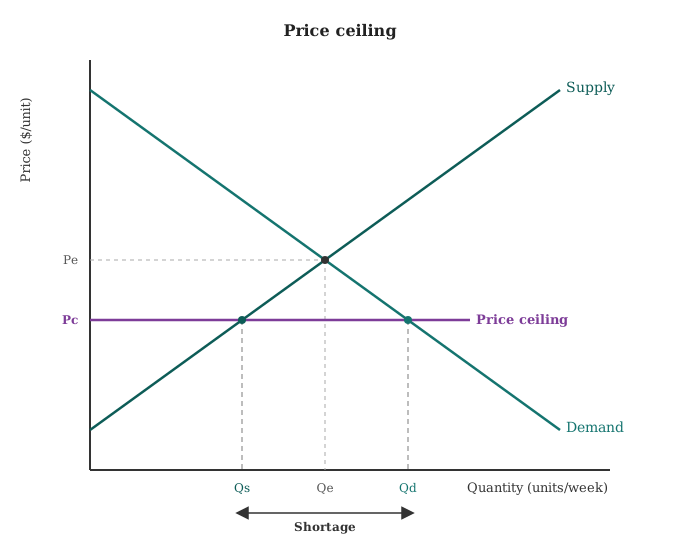
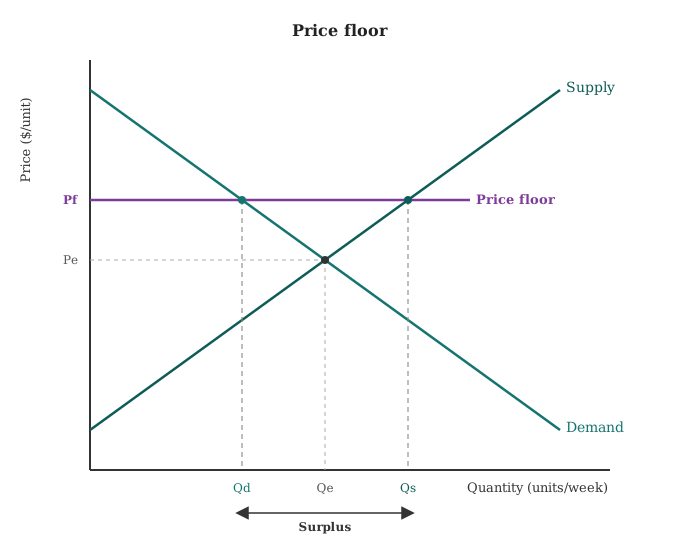
Price controls regulate prices above or below the market equilibrium.
Price ceiling (maximum price)
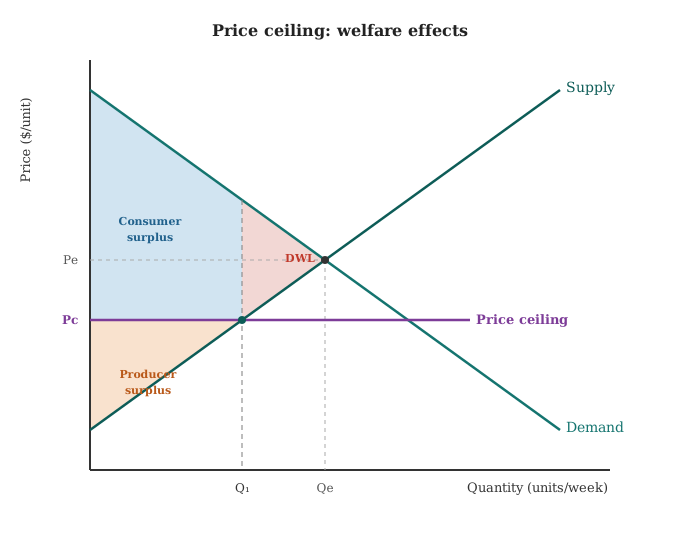
Set below the equilibrium to make goods more affordable. To be effective, it must be below the equilibrium price.
| Stakeholder | Effect |
|---|---|
| Consumers who can buy | Better off — pay a lower price |
| Consumers who cannot buy | Worse off — shortage means some cannot get the good |
| Producers | Worse off — receive lower price, sell less; revenue falls |
| Society | Deadweight loss (DWL) — allocative inefficiency |
A black market can arise: firms or consumers illegally charge a price above the legal maximum to clear the shortage.
Price floor (minimum price)
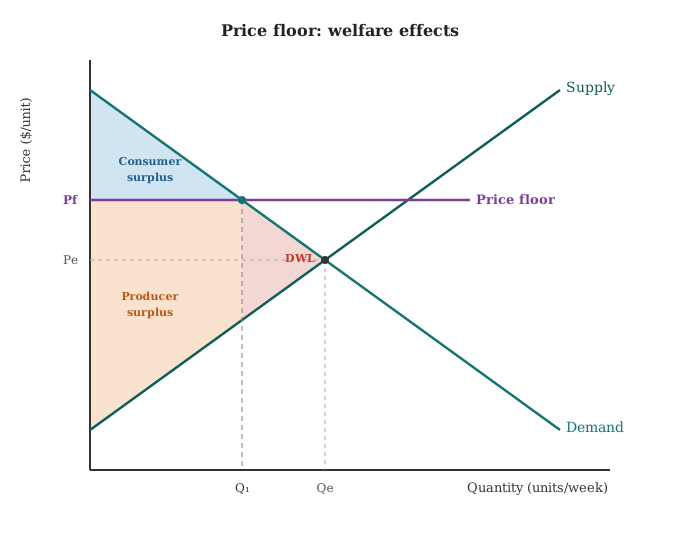
Set above the equilibrium to increase the price producers receive. To be effective, it must be above the equilibrium price.
| Stakeholder | Effect |
|---|---|
| Producers who sell | Better off — receive a higher price |
| Consumers | Worse off — pay a higher price and buy less |
| Unsold producers | Worse off — surplus means some producers cannot sell |
| Society | Deadweight loss — allocative inefficiency; surplus may require government purchase |
Indirect Taxes
An indirect tax is a tax imposed on expenditure on goods and services. "Indirect" because consumers pay the producer, and the producer pays the government — the producer is the key actor in collection and payment.
Types
- Specific tax: fixed amount per unit (e.g. $2 per packet of cigarettes)
- Ad valorem tax: a percentage of the selling price (e.g. 20% VAT)
Why governments use indirect taxes
- Raise government revenue
- Reduce consumption of demerit goods or goods with negative externalities
- Broaden the tax base
Effect on the market
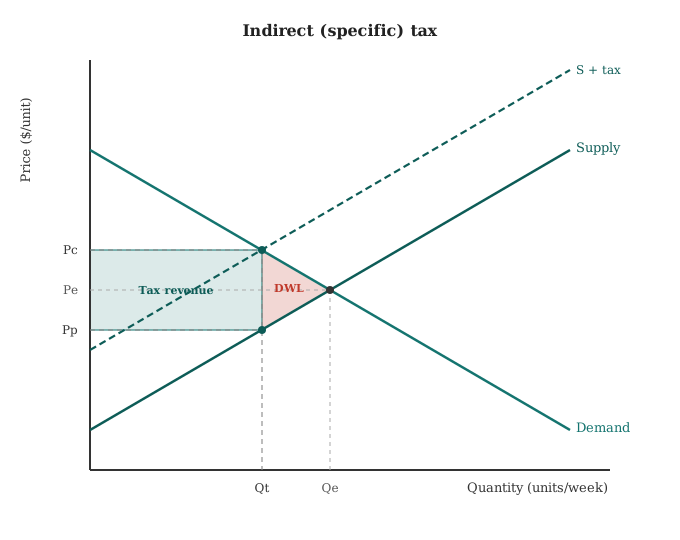
The tax is paid by producers → it increases costs → supply shifts left (decreases). The vertical distance between the original and new supply curves equals the tax per unit. New equilibrium: higher price for consumers, lower price received by producers, lower quantity.
Effects on stakeholders
| Stakeholder | Effect |
|---|---|
| Consumers | Pay a higher price (Pc); buy less |
| Producers | Receive a lower price (Pp = Pc − tax per unit); sell less; revenue falls |
| Government | Gains tax revenue = tax per unit × quantity sold (Qt) |
| Workers | May see increased unemployment as quantity produced falls |
| Society | Deadweight loss — small triangle of lost social surplus |
Tax incidence
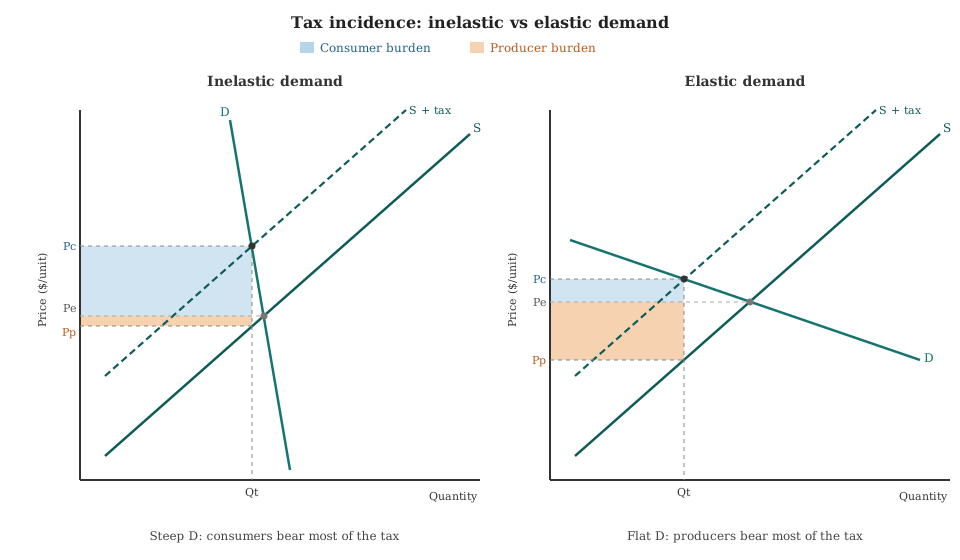
Tax incidence refers to who actually bears the burden of the tax. This depends on PED:
- Inelastic demand: consumers bear more of the tax — they cannot easily reduce quantity demanded, so producers can pass most of the tax on as higher prices
- Elastic demand: producers bear more of the tax — if they raise prices, Qd falls sharply, so producers absorb more of the cost
Subsidies
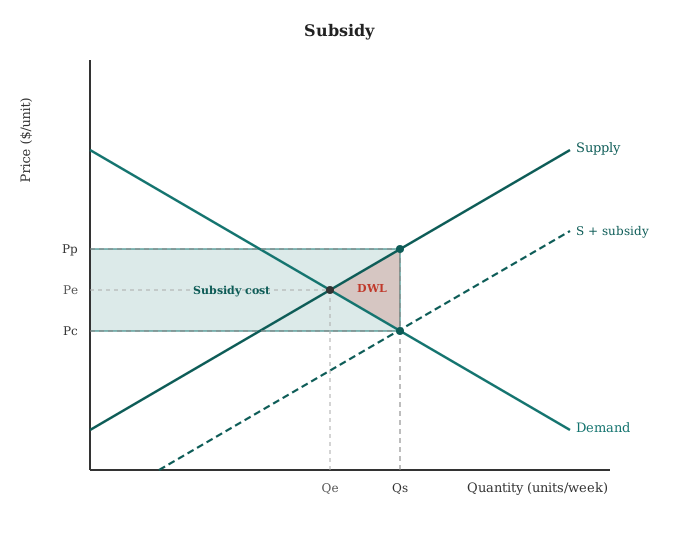
A subsidy is a payment from the government to producers, lowering their costs and shifting supply right (down) to S + subsidy. Producers receive a higher price (Pp), consumers pay a lower price (Pc), and quantity rises.
Fuller notes on subsidies — their effects on consumers, producers, government spending, and efficiency — will be added here.
Practice questions for this topic will be added here.