2.6
Elasticity of Supply
Price elasticity of supply (PES) and its determinants.
You should be able to
- Define PES and calculate it from data
- Classify PES values (elastic, inelastic, unit elastic, perfectly elastic/inelastic)
- Explain the determinants of PES
- Explain why PES for primary commodities is generally lower than for manufactured goods HL
Price Elasticity of Supply (PES)
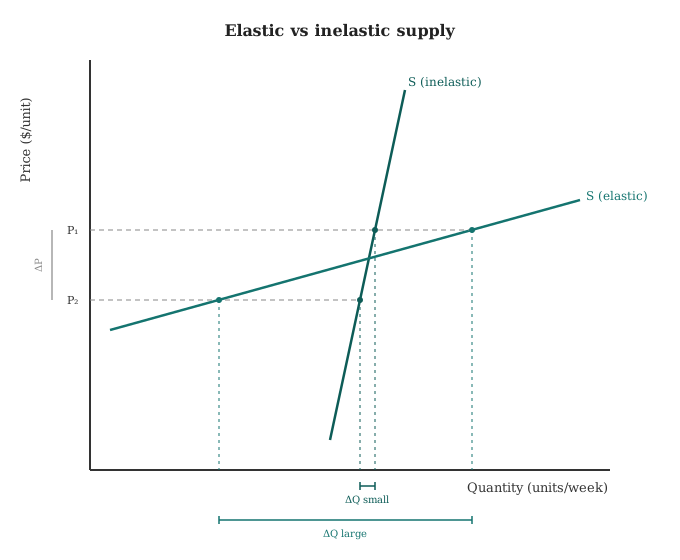
PES measures the responsiveness of quantity supplied to a change in price. Notice this mirrors PED — but we are talking about producers, not consumers.
PES Formula
PES = % change in Qs ÷ % change in P
PES is always positive (price and quantity supplied move in the same direction).
| Value | Description |
|---|---|
| PES > 1 | Elastic — quantity supplied responds more than proportionately |
| PES < 1 | Inelastic — quantity supplied responds less than proportionately |
| PES = 1 | Unit elastic |
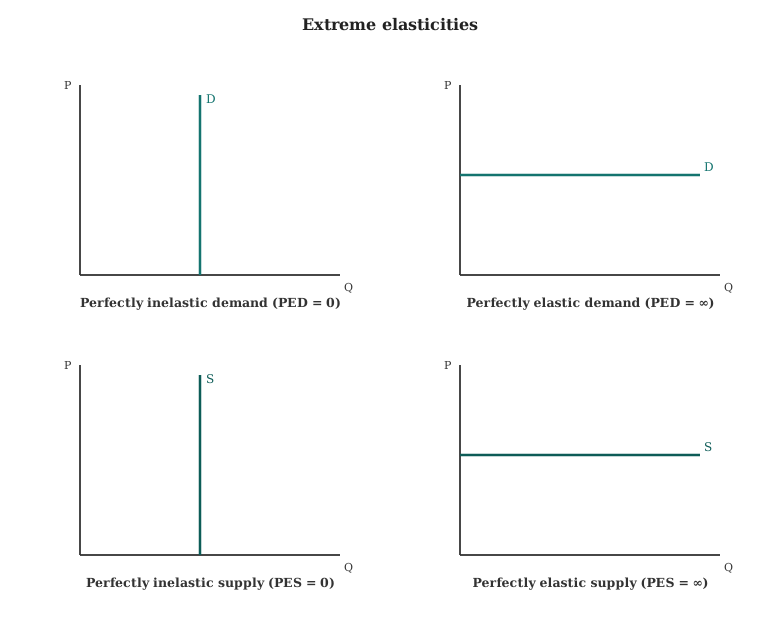
| PES = 0 | Perfectly inelastic (vertical supply curve) — fixed supply regardless of price |
| PES = ∞ | Perfectly elastic (horizontal supply curve) |
Determinants of PES
| Determinant | More elastic when… |
|---|---|
| Time | More time to adjust — firms can expand capacity in the long run |
| Mobility of factors of production | Resources can be easily switched between uses |
| Unused (spare) capacity | Existing capacity can be quickly brought into use |
| Ability to store | Goods can be stockpiled and released when prices rise |
| Rate at which costs increase | Costs rise slowly as output increases — producers can expand without large cost increases |
HL only — Primary commodities vs manufactured goods
Primary commodities (e.g. apples, wheat, oil) generally have lower PES than manufactured goods because:
- Agriculture is constrained by land availability, planting cycles, and weather — output cannot be increased quickly
- Extraction industries face geological and infrastructure constraints
- Manufacturing can often use existing machinery and supply chains to expand output relatively quickly
This explains why commodity prices can be very volatile: when demand shifts, supply cannot respond quickly, so the price adjustment is large.
Materials to come
Practice questions for this topic will be added here.