Demand
The law of demand, non-price determinants, and shifts of the demand curve.
- Define demand and state the law of demand
- Draw a demand curve and explain movements along it
- Identify non-price determinants of demand and explain how each shifts the curve
- Distinguish between a movement along the demand curve and a shift of the curve
- Distinguish normal, inferior, and luxury goods
- Explain the income and substitution effects HL
- Explain the law of diminishing marginal utility HL
What is Demand?
Demand is the various quantities of a good that consumers are willing and able to buy at different possible prices during a particular time period, ceteris paribus (all other things equal).
Three conditions must all be true for demand to exist: Do you want it? Can you afford it? Are you actually in the market for it?
As the price increases, the quantity demanded decreases, and vice versa, ceteris paribus.
Ceteris paribus matters: if price falls and it's a hotter day than normal, you cannot tell whether ice cream demand increased because of the price or the weather. We hold everything else constant to isolate the effect of price.
The Demand Curve
The demand curve is drawn with price (P) on the vertical axis and quantity demanded (Q) on the horizontal axis. It slopes downward, reflecting the law of demand.
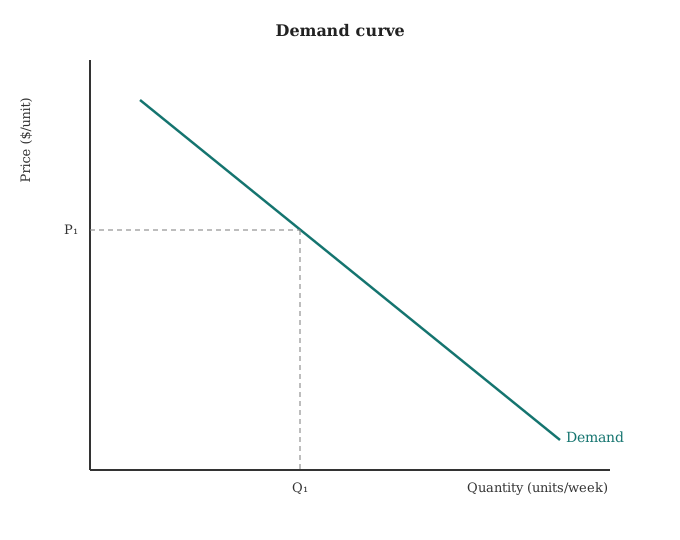
A movement along the demand curve occurs when price changes. This changes the quantity demanded, not demand itself.
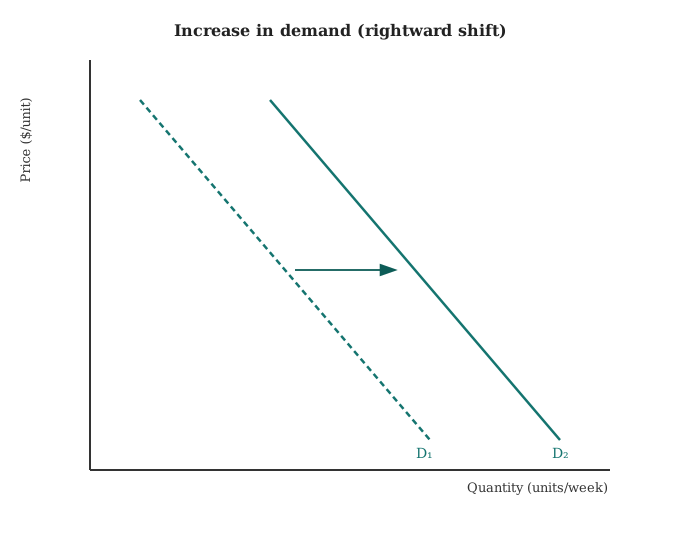
A shift of the demand curve occurs when something other than price changes. This changes demand — the whole curve moves.
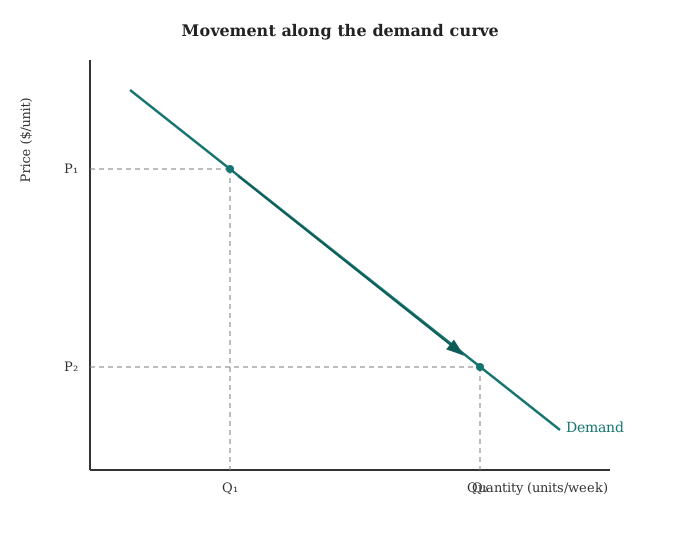
Every demand/supply diagram needs: Title, Axes (numbers, labels, units), Labels (P and Q at equilibrium), Lines (the curve), Arrows (showing direction of shifts), Ruler.
Non-price Determinants of Demand (TICS)
These are the factors that shift the demand curve. Remember them as TICS:
| Factor | How it shifts demand | Example |
|---|---|---|
| Tastes and preferences | Change in consumer preferences shifts demand right (more popular) or left (less popular) | A K-drama shows the lead actor drinking banana milk — demand for banana milk increases |
| Income | For normal goods: income up → demand right. For inferior goods: income up → demand left. | Instant noodles: wages increase → demand falls (inferior good) |
| Complementary good prices | Complements are goods used together. If the complement's price falls, demand for the main good rises. | Price of Epson ink falls → demand for Epson printers increases |
| Substitute good prices | Substitutes replace each other. If a substitute's price rises, demand for the main good rises. | Price of Domino's rises → demand for Pizza Hut increases |
| Expectations of future price | If consumers expect prices to rise, they buy now — demand increases today. | Consumers expect gold prices to rise next month → demand for gold increases today |
| Number of consumers | More buyers in the market → demand increases | Sharp increase in population density → demand for online food delivery rises |
- Normal good: if income increases, you buy more
- Inferior good: if income increases, you buy less (e.g. instant noodles, second-hand goods)
- Luxury good: if income increases, you buy proportionately more than the income rise
HL: Why the Demand Curve Slopes Down
Law of Diminishing Marginal Utility HL
Marginal utility is the extra satisfaction from consuming one more unit. Total utility rises (up to a point), but marginal utility falls with each additional unit consumed. Because consumers will not pay more than the marginal utility of a unit, as marginal utility falls, they will only buy more at a lower price. This explains the downward slope of the demand curve.
Example: cinema tickets per month. The first ticket gives high satisfaction. The second is still enjoyable but adds less. By the third or fourth, novelty has faded — you would only go if the price were lower.
Income and Substitution Effects HL
When the price of a good falls, two effects reinforce each other to increase quantity demanded:
- Substitution effect: the good becomes cheaper relative to alternatives, so consumers substitute it for other goods.
- Income effect: a lower price increases real purchasing power — consumers can afford more within the same budget.
Example: cinema ticket price falls. It becomes cheaper relative to streaming or bowling (substitution effect), and consumers' real purchasing power increases so they can afford more tickets (income effect).
Practice questions for this topic will be added here.