Elasticities of Demand
Price elasticity of demand (PED), income elasticity of demand (YED), and their implications.
- Define PED and calculate it from data
- Classify PED values (elastic, inelastic, unit elastic, perfectly elastic/inelastic)
- Explain the determinants of PED
- Explain the relationship between PED and total revenue
- Define YED and calculate it from data
- Classify goods using YED (normal, inferior, necessity, luxury)
- Explain why elasticity matters for indirect taxes
Price Elasticity of Demand (PED)
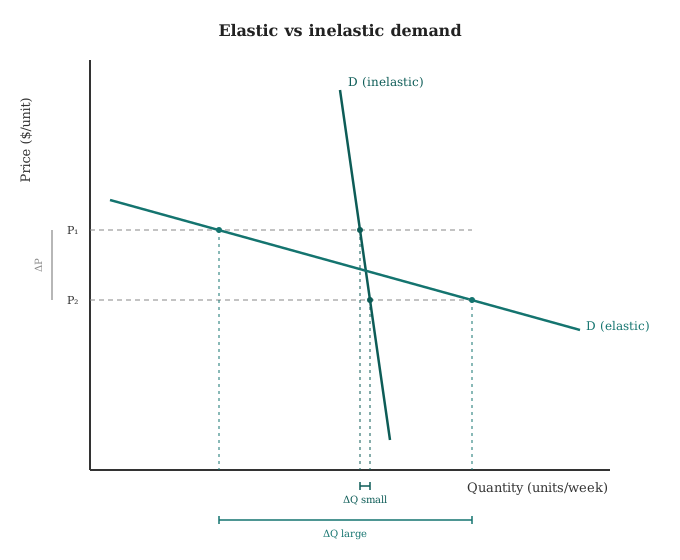
PED is a measure of the responsiveness of the quantity of a good demanded to changes in its price. If quantity demanded is highly responsive to a price change, demand is price elastic. If not very responsive, demand is price inelastic.
PED is always negative (price and quantity move in opposite directions). We use the absolute value when classifying elasticity.
Values of PED
| Value (absolute) | Description | Meaning |
|---|---|---|
| |PED| > 1 | Elastic | Quantity changes proportionately more than price |
| |PED| < 1 | Inelastic | Quantity changes proportionately less than price |
| |PED| = 1 | Unit elastic | Quantity changes by the same proportion as price |
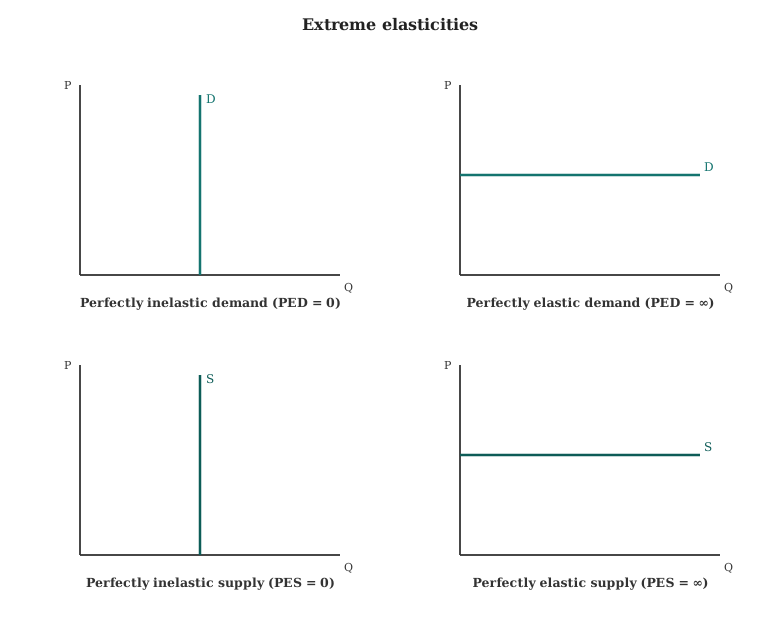
| |PED| = 0 | Perfectly inelastic | Quantity does not change regardless of price (vertical demand curve) |
| |PED| = ∞ | Perfectly elastic | Any price rise results in zero demand (horizontal demand curve) |
Determinants of PED
| Determinant | More elastic when… |
|---|---|
| Availability of substitutes | Many close substitutes exist — consumers can easily switch |
| Necessity vs luxury | Good is a luxury — consumers can choose not to buy if price rises |
| Proportion of income | Large proportion of income spent — price changes have a big impact on what is left to spend |
| Width of definition | Narrow definition — e.g. "Toyota Prius" is more elastic than "a car" |
| Time | Longer time to adjust — consumers find alternatives over time |
PED and total revenue
| Elasticity | Price rises → Revenue… | Price falls → Revenue… |
|---|---|---|
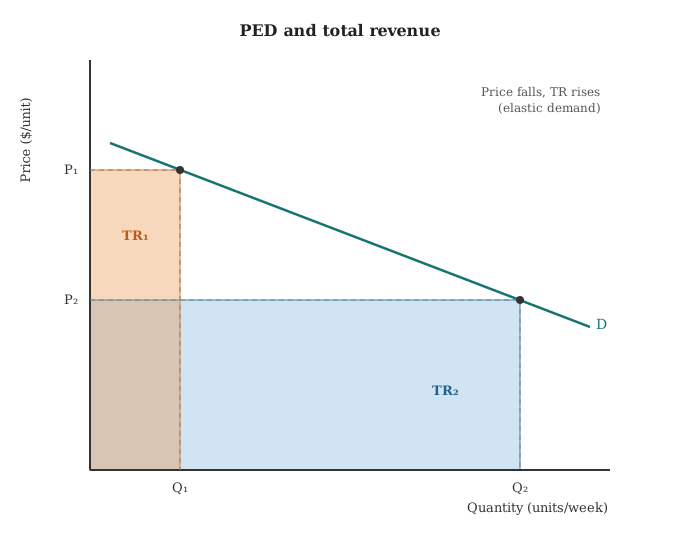
| Elastic (|PED| > 1) | Falls (Qd falls proportionately more) | Rises |
| Inelastic (|PED| < 1) | Rises (Qd falls proportionately less) | Falls |
| Unit elastic (|PED| = 1) | Unchanged | Unchanged |
Elasticity and Indirect Taxes
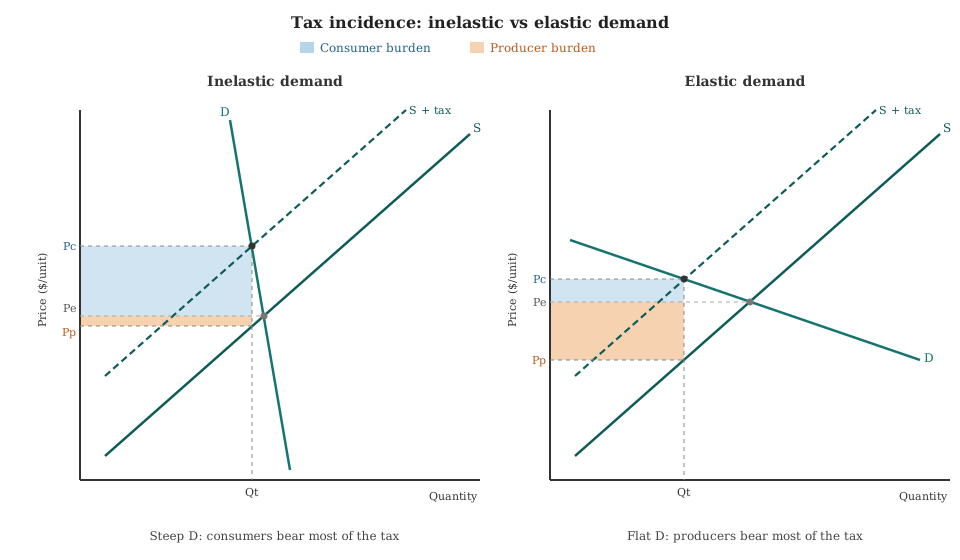
An indirect tax shifts the supply curve left, raising the price consumers pay. The effect depends on PED:
- If demand is inelastic: Qd does not fall much. The tax raises significant government revenue but does little to change behaviour. Effective for raising revenue (e.g. cigarettes, petrol).
- If demand is elastic: Qd falls substantially. The tax changes behaviour significantly but raises less revenue. Effective for correcting externalities (e.g. plastic bags).
Income Elasticity of Demand (YED)
YED measures the responsiveness of demand to a change in consumer income.
| YED value | Type of good | Example |
|---|---|---|
| Negative | Inferior good — demand falls as income rises | Instant noodles, second-hand goods |
| 0 < YED < 1 | Normal necessity — demand rises less than proportionately with income | Basic food (rice, bread) |
| YED > 1 | Luxury good — demand rises more than proportionately with income | Luxury handbags, overseas holidays, restaurant meals |
The Engel curve plots quantity demanded against income for the same good — it can show different classifications at different income levels.
As incomes rise across an economy, demand shifts toward luxury goods and services (high YED) and away from basic necessities and inferior goods (low or negative YED). This explains why the agricultural share of GDP falls as economies develop, while services grow. Firms can use YED to identify which sectors will grow fastest as incomes rise.
Worked Example — Calculating PED
The price of sneakers rises from $100 to $120. Quantity demanded falls from 500 to 400.
Step 1: Calculate the changes
ΔP = 120 − 100 = +20 P = 100
Step 2: Apply the formula
Step 3: Interpret
Worked Example — Calculating YED
Original income: $3,000. New income: $3,600. Original Qd of luxury handbags: 2/year. New Qd: 4/year.
% change in income = (3,600 − 3,000)/3,000 × 100 = +20%
YED = 100 ÷ 20 = +5
YED > 1 → luxury good. Demand is highly income elastic.
Practice questions for this topic will be added here.